
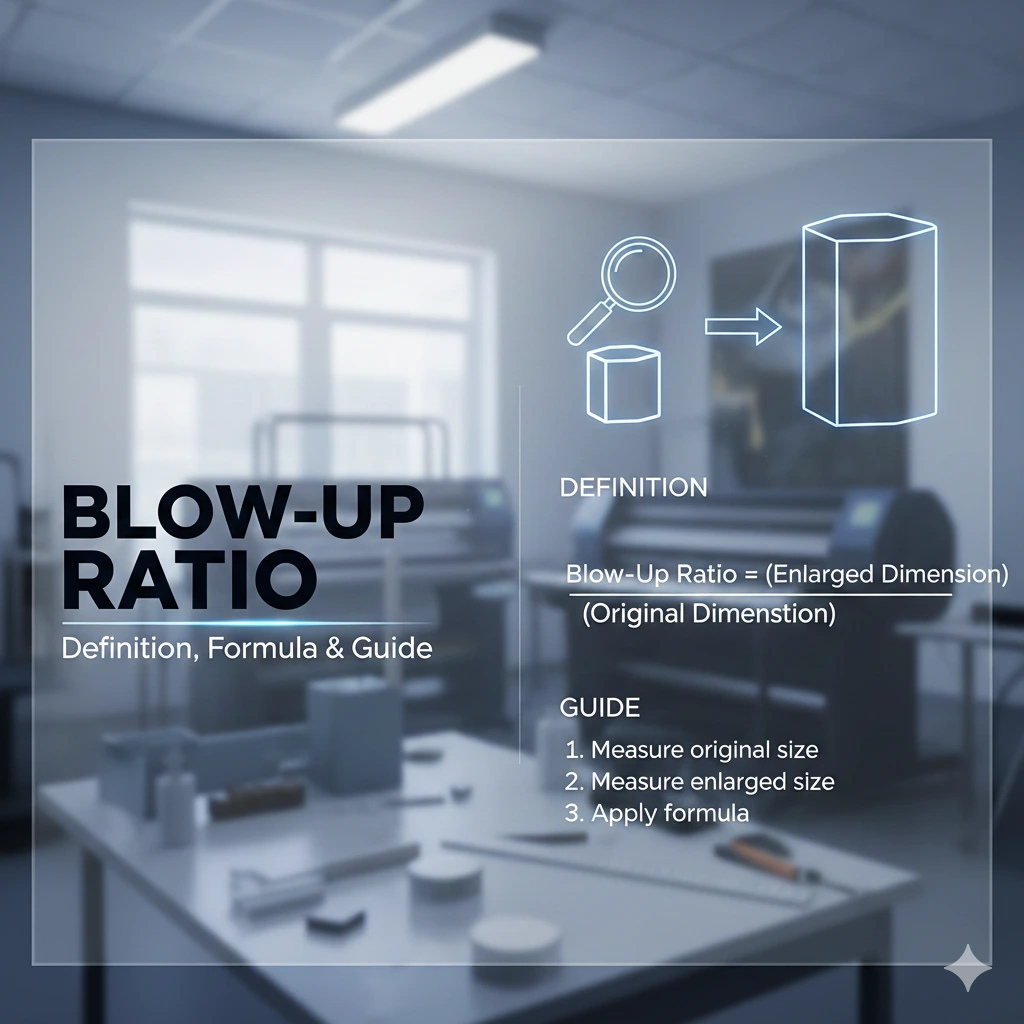
Introduction to Blow-Up Ratio
The blow-up ratio (BUR ratio) is a critical parameter in the blown film extrusion process. It defines the ratio between the final diameter of the blown film bubble and the diameter of the die. Understanding the BUR ratio is essential for manufacturers, engineers, and technical professionals to ensure consistent film quality, proper thickness, and uniform stretching.
In blown film extrusion, a precise blow-up ratio affects the mechanical properties of the film, such as tensile strength, clarity, and barrier performance. Miscalculating the BUR ratio can result in defects, uneven thickness, or poor mechanical properties.
Bullet points overview of importance:
- Ensures uniform film thickness and strength
- Optimizes material usage and reduces waste
- Influences bubble stability during extrusion
- Key factor in process optimization for production efficiency
Practical Uses of BUR Ratio
- Adjusting die diameter to meet film specifications
- Calculating draw down ratio blown film formula
- Using an extrusion calculator for process optimization
Customer Testimonial Highlight
“Using the BUR ratio correctly transformed our production line. Film thickness consistency and quality improved drastically.” – Rajiv P., California
Pros and Cons
Pros:
- Enhances film quality and uniformity
- Reduces material waste
- Critical for process standardization
Cons:
- Miscalculations can lead to production defects
- Requires precise monitoring and measurement tools
Master the BUR ratio and optimize your blown film extrusion process. Continue reading to learn the formula, calculations, and best practices.
Blow-Up Ratio Definition Explained
The blow-up ratio is calculated as the ratio of the final bubble diameter to the die diameter. It is essential in the blown film extrusion process to control film thickness and mechanical properties. For example, a bubble diameter of 600 mm from a die diameter of 100 mm gives a BUR ratio of 6:1.
Why BUR Ratio Matters
- Determines film thickness uniformity
- Impacts tensile strength and elongation
- Essential for material efficiency
Relationship with Draw Down Ratio
The draw down ratio blown film formula relates the BUR ratio with the thickness of the film. Both parameters must be balanced to achieve optimal extrusion results. A high BUR ratio with low draw down can lead to thinner films and potential instability.
Comparison with Competitors
| Parameter | Competitor Manual | Our Guide |
| BUR Ratio Explanation | Basic | Step-by-step calculation examples |
| Draw Down Formula | Minimal | Integrated with BUR ratio guidance |
| Application | Limited | Practical production scenarios with PDF references |
Customer Testimonial Highlight
“Understanding the BUR ratio and draw down formula from this guide helped me optimize our extrusion line and reduce scrap.” – Anita K., Texas
Learn how to calculate the BUR ratio for your film extrusion project with precision and efficiency.
Blow-Up Ratio Formula
The blow-up ratio formula is:
BUR Ratio = Bubble Diameter ÷ Die Diameter
This simple formula is foundational for calculating film thickness and process parameters. Integrating it with the draw down ratio blown film formula provides a complete understanding of film production.
Step-by-Step Calculation
- Measure the die diameter of the extruder
- Measure the diameter of the blown bubble
- Apply the BUR ratio formula
- Adjust line to achieve the desired thickness
Using an Extrusion Calculator
Modern manufacturers often use an extrusion calculator to simulate BUR ratio adjustments and predict final film thickness. This helps avoid trial-and-error in production and ensures uniformity.
Pros and Cons
Pros:
- Simple formula, easy to implement
- Works with manual and automated processes
- Helps optimize material usage
Cons:
- Requires accurate measurements
- Environmental factors can affect bubble stability
Customer Testimonial Highlight
“The BUR ratio calculation combined with our extrusion calculator reduced defects by 20%.” – Michael J., New Jersey
Use the BUR ratio formula with an extrusion calculator to achieve precise blown film production results.
Applications of Blow-Up Ratio
The BUR ratio is used across multiple applications in blown film production, including packaging films, industrial liners, and medical-grade films.
Key Applications
- Polyethylene and polypropylene film production
- Multi-layer film extrusion
- Stretch films and barrier packaging
Optimization Tips
- Maintain stable cooling and line speed for consistent BUR ratio
- Adjust die and bubble size based on product specifications
- Use Blown film extrusion process PDF or Film extrusion manual PDF for detailed guidelines
Comparison Table
| Application | Competitor Guide | Our Article |
| Industrial Films | Basic | Step-by-step BUR optimization |
| Packaging Films | Limited | Detailed formula and calculator support |
| Medical Films | Minimal | Practical guide with PDF references |
Optimize your BUR ratio for each application using proven techniques and process manuals.
Blow-Up Ratio in Photography and Other Industries
Interestingly, the term blow-up ratio is also used in photography, microscopy, and optics, referring to magnification. While the context differs, understanding ratios and scaling is essential in all fields.
- Macro photography uses a blow-up ratio to calculate lens magnification
- Industrial processes apply the BUR ratio for precision scaling
- Comparison with traditional magnification ratios helps clarify usage
Customer Testimonial Highlight
“Applying the concept of blow-up ratios from manufacturing to photography helped our product imaging consistency.” – Sara L., New York
Learn how to apply the principles of BUR ratio beyond extrusion for improved accuracy in various technical fields.
Common Mistakes and Misunderstandings
Many beginners misinterpret the BUR ratio and draw down ratio formulas.
Common mistakes:
- Ignoring die diameter variations
- Misreading bubble diameter due to camera or measurement errors
- Using outdated Film extrusion manual PDF without updated guidelines
Pros and Cons
Pros of Correct Understanding:
- Accurate film thickness
- Less scrap and waste
- Better product quality
Cons of Misunderstanding:
- Inconsistent films
- Production delays
- Higher material costs
Avoid errors by referencing Blown film extrusion process PDF and using precise measurement tools.
Tools and Techniques to Calculate BUR Ratio
- Extrusion calculator for automated predictions
- Bubble measurement tools and laser gauges
- Using updated manuals like Film extrusion manual PDF for step-by-step guidance
- Monitoring line speed and cooling for stability
Customer Testimonial Highlight
“With the extrusion calculator, we optimized our BUR ratio with minimal manual adjustments.” – Rajesh K., Illinois
Use these tools to calculate BUR ratio efficiently and maintain high-quality production.
Tips for Optimizing Blow-Up Ratio
- Keep consistent line speed
- Monitor cooling air and temperature
- Adjust die gap and bubble size for product specifications
- Refer to Blown film extrusion process PDF for advanced tips
Implement these tips to maintain an accurate BUR ratio and achieve uniform, high-quality blown films.
Frequently Asked Questions (7 FAQs)
- What is BUR ratio in blown film extrusion?
It is the ratio of the bubble diameter to the die diameter, determining film thickness. - How do I calculate blow-up ratio?
Use the formula: BUR Ratio = Bubble Diameter ÷ Die Diameter. - What is the draw down ratio blown film formula?
It relates line speed and die diameter to final film thickness. - Can an extrusion calculator help with BUR ratio?
Yes, it predicts thickness and process parameters for consistent film. - Where can I find a blown film extrusion process PDF?
Updated manuals and PDFs provide step-by-step guidelines. - Is BUR ratio important for all films?
Yes, it affects thickness, strength, and uniformity in all blown films. - Does the film extrusion manual PDF include BUR ratio calculations?
Yes, most technical manuals include formulas, examples, and practical tips.
