
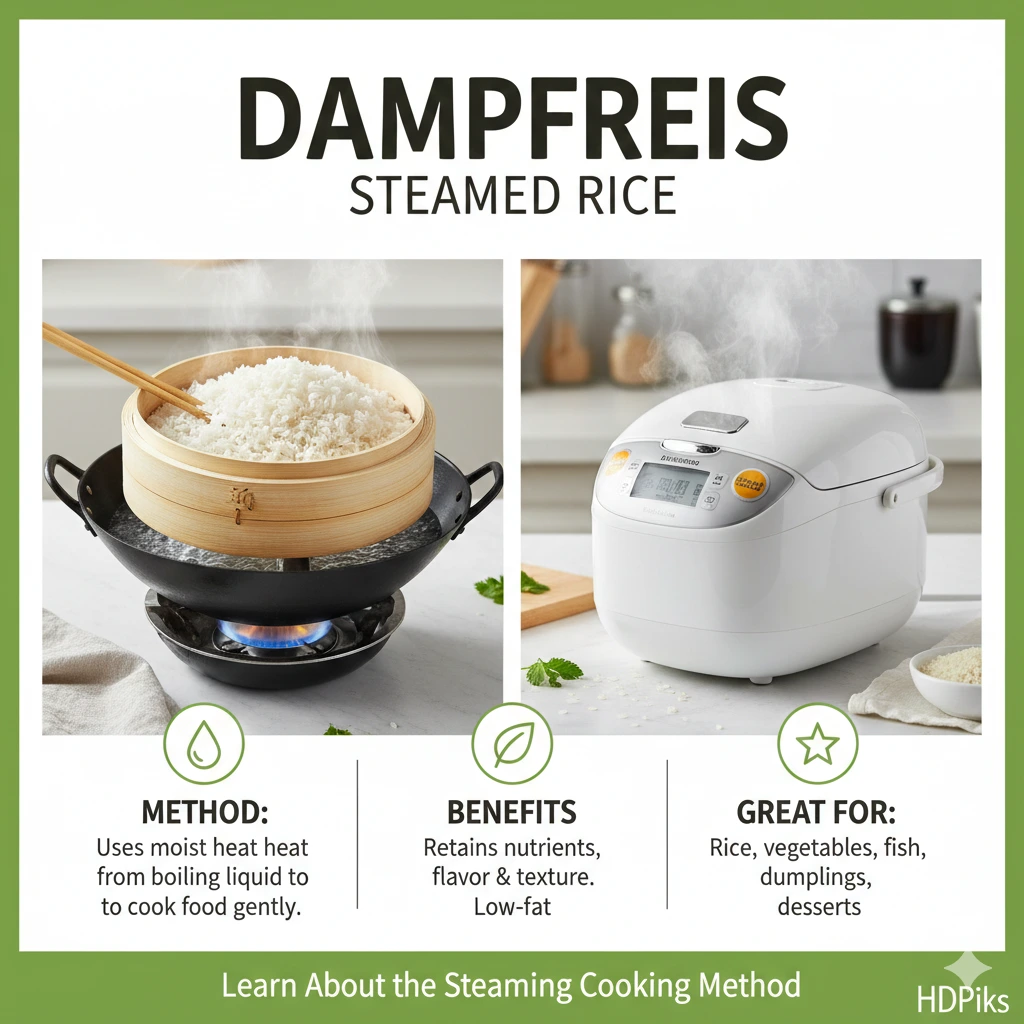
Dampfreis-Learn About the Steaming Cooking Method | HDPiks
Introduction to Dampfreis
Dampfreis is a traditional steaming cooking method that has been used for centuries to prepare rice and other grains. Unlike boiling, Dampfreis preserves nutrients, flavor, and texture, making it a preferred method for healthy and delicious meals. In the modern kitchen, this method has regained popularity due to its efficiency and nutritional benefits.
Why Dampfreis Matters
-
Retains vitamins and minerals in grains.
-
Produces fluffy, non-sticky rice.
-
Ideal for meal prep and healthy cooking.
Dampfreis is versatile and can be applied to rice, quinoa, and other grains. Cooking using this method ensures that grains remain tender while keeping their natural flavors intact. Many home cooks and professional chefs prefer Dampfreis for its simplicity and reliability.
Quick Facts
-
Dampfreis originated in Europe but is widely practiced globally.
-
It can be done using steamer baskets, electric rice cookers, or steaming pots.
-
The method works equally well for white, brown, or specialty rice.
By mastering Dampfreis, you can consistently produce meals that are both nutritious and visually appealing.
What is Dampfreis?
Dampfreis is the process of cooking grains with steam instead of direct boiling. This method ensures that water is absorbed gradually, preventing sogginess or overcooking.
Key Features of Dampfreis
-
Uses indirect heat from boiling water.
-
Grains cook evenly and retain their shape.
-
Nutrients are preserved better than in traditional boiling.
Dampfreis vs Boiled Rice: Comparison Table
| Feature | Dampfreis | Boiled Rice | Notes |
|---|---|---|---|
| Texture | Fluffy | Can be sticky | Dampfreis prevents clumping |
| Nutrient Retention | High | Moderate | Steam preserves vitamins |
| Flavor | Natural | Can be diluted | Dampfreis enhances natural taste |
| Cooking Control | Easy | Moderate | Less risk of overcooking |
Dampfreis is ideal for anyone looking to improve the quality and taste of their grains while ensuring health benefits.
Tools and Equipment Needed
To cook Dampfreis effectively, certain tools and equipment are recommended. These allow you to control the steaming process precisely.
Essential Tools
-
Steamer pot or steaming basket.
-
Electric rice cooker with a steaming function.
-
Measuring cups for accurate water-to-grain ratio.
-
Timer to avoid overcooking.
Optional Tools
-
Silicone spatula for fluffing grains.
-
Heat-resistant gloves for safety.
Competitor Comparison
| Equipment Type | Ease of Use | Nutrient Preservation | Price Range |
|---|---|---|---|
| Steamer Pot | Moderate | High | $20–$50 |
| Electric Rice Cooker | Easy | High | $30–$100 |
| Microwave Steaming Bowl | Easy | Moderate | $15–$40 |
Customer Testimonial
“I tried Dampfreis using a steamer basket, and the rice turned out perfect—fluffy and flavorful every time. Highly recommended!” – Sarah T., Home Cook
Step-by-Step Cooking Process
Preparing the Grains
-
Rinse rice or grains thoroughly to remove excess starch.
-
Soak grains for 20–30 minutes for better texture (optional).
Steaming Process
-
Fill the steamer with water, ensuring it does not touch the grains.
-
Place grains in a steaming basket and cover with a lid.
-
Steam for 20–30 minutes, depending on the type of grain.
-
Check halfway and stir gently if needed.
Tips for Perfect Dampfreis
-
Use filtered water for better taste.
-
Avoid lifting the lid frequently to retain steam.
-
Fluff grains gently with a spatula before serving.
Dampfreis for Different Grains
Dampfreis is not limited to rice. It can be applied to various grains, each requiring slight adjustments.
Grain Cooking Times
| Grain | Water Ratio | Steam Time | Texture |
|---|---|---|---|
| White Rice | 1:1 | 20 min | Fluffy |
| Brown Rice | 1:1.25 | 30 min | Tender |
| Quinoa | 1:1 | 15 min | Light & Fluffy |
| Barley | 1:1.5 | 40 min | Chewy |
Dampfreis allows you to maintain the perfect consistency and flavor, whether you are cooking breakfast, lunch, or dinner grains.
Health Benefits of Dampfreis
Dampfreis offers several health advantages over traditional cooking methods.
Nutritional Benefits
-
Retains more vitamins and minerals.
-
Requires little to no added oil or fat.
-
Helps maintain a low-calorie, low-fat diet.
Pros and Cons of Dampfreis
Pros:
-
Nutrient-rich results.
-
Grains remain fluffy and flavorful.
-
Easy to cook once the process is understood.
Cons:
-
Slightly longer cooking time than boiling.
-
Requires a steamer or specialized equipment.
Dampfreis is ideal for anyone aiming for a healthy lifestyle while enjoying delicious grains.
Common Mistakes and Troubleshooting
Mistake 1: Oversteaming
-
Can make grains mushy.
-
Always monitor water levels.
Mistake 2: Using Too Much Water
-
Excess water dilutes flavor and texture.
Mistake 3: Not Fluffing Grains
-
Leads to clumped or sticky rice.
Quick Tips
-
Follow recommended cooking times.
-
Use the correct water-to-grain ratio.
-
Refer to the table for different grains for perfect results.
Tips, Tricks, and Variations
-
Add herbs, spices, or broth for enhanced flavor.
-
Experiment with multi-grain mixes for texture and nutrition.
-
Use Dampfreis for meal prep; it keeps grains fluffy for later use.
Customer Testimonial
“Dampfreis has transformed my meal prep routine. I can make large batches that stay fluffy all week!” – Jason R., Fitness Enthusiast
Conclusion
Dampfreis is a versatile, healthy, and easy-to-master steaming method. Whether you are a beginner or an experienced cook, mastering Dampfreis ensures flavorful, nutritious, and perfectly cooked grains every time.
Try cooking your next batch of rice or grains using Dampfreis and share your results on HDPiks.com. Explore more healthy cooking methods and recipes on our blog.
FAQs
1. What is Dampfreis?
Dampfreis is a traditional steaming method for cooking rice and other grains, preserving nutrients and flavor.
2. Can I use Dampfreis for quinoa or barley?
Yes, Dampfreis works for most grains, with slight adjustments in water ratio and steam time.
3. Do I need special equipment for Dampfreis?
A steamer pot, steaming basket, or electric rice cooker is recommended for best results.
4. How long does Dampfreis take to cook rice?
Typically 20–30 minutes for white rice, longer for brown rice or barley.
5. Is Dampfreis healthier than boiling?
Yes, it retains more nutrients and requires less oil or fat.
6. Can I flavor Dampfreis with herbs or broth?
Absolutely. Add spices, herbs, or broth to enhance taste while maintaining nutrition.
7. How do I prevent Dampfreis from becoming sticky?
Rinse grains, use the correct water ratio, and fluff gently after cooking.
