
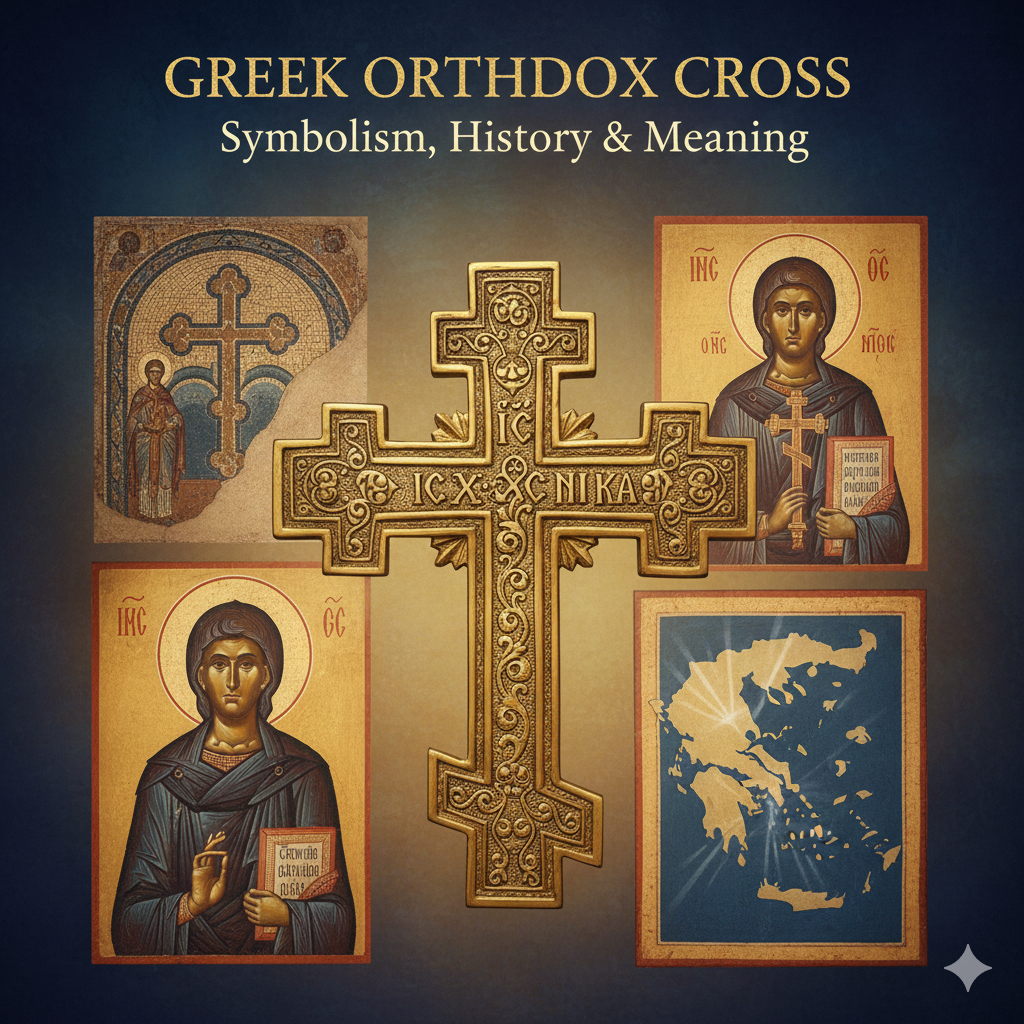
Introduction to the Greek Orthodox Cross
The Greek Orthodox Cross is a prominent symbol in the Eastern Orthodox Church, representing faith, devotion, and spiritual protection. Distinct from the Latin cross, it holds unique proportions and design elements that reflect the theological and cultural identity of Greek Orthodoxy. Many believers use it in homes, churches, or as personal jewelry. The Greek Orthodox Cross for sale is widely available in jewelry stores and online platforms, reflecting its popularity in modern spiritual life.
Key Features
- A cross with three horizontal bars and one vertical bar
- Represents Jesus Christ’s crucifixion and resurrection
- Often used in religious rituals and Orthodox ceremonies
- Incorporated in architecture, icons, and artwork
Comparison with Competitors
Unlike the Latin or Celtic cross, the Greek Orthodox cross emphasizes a balanced structure with specific symbolism for each bar. Platforms like Greek Orthodox cross wikipedia highlight its historical context, while other crosses focus on aesthetic rather than spiritual significance.
Customer Testimonial Highlights
Believers report that wearing a Greek Orthodox Cross Necklace offers a sense of spiritual grounding. Many collectors appreciate Greek orthodox cross images for their intricate designs and historical authenticity.
Pros and Cons
Pros:
- Rich historical and spiritual significance
- Versatile for jewelry, tattoos, and wall art
- Easily recognized as a symbol of Orthodox faith
Cons:
- May be misunderstood outside Orthodox communities
- Large designs require careful placement in art or wall décor
Expnlore authentic Greek Orthodox Cross for sale today and incorporate this sacred symbol into your daily life, personal collection, or home decor.
History of the Greek Orthodox Cross
The Greek Orthodox cross traces its origins to early Byzantine Christianity. Its design evolved to reflect theological meanings while maintaining simplicity and clarity. Early church builders and iconographers incorporated the cross in mosaics, frescoes, and architecture, solidifying its presence across Eastern Orthodox cultures.
Historical Highlights
- Used since 4th century in Byzantine churches
- Symbolizes resurrection, salvation, and the Holy Trinity
- Featured in religious manuscripts and icons
- Became popular in jewelry by the 18th century
Comparison with Competitors
While Latin crosses became popular in Western Europe, the Greek Orthodox Cross remained central to Eastern Orthodox traditions. Modern Greek Orthodox Cross Men necklaces and accessories maintain this historic style while adding contemporary appeal.
Customer Testimonial Highlights
Collectors and Orthodox faithful praise its historical authenticity. Many highlight that Greek Orthodox cross tattoo designs honor both faith and artistic heritage.
Pros and Cons
Pros:
- Deep historical and cultural significance
- Recognizable symbol for Orthodox Christians
- Adaptable for modern accessories and art
Cons:
- Complex symbolism may require explanation outside Orthodox communities
- Rare large artifacts can be expensive
Embrace a piece of history with a Greek Orthodox Cross Necklace or explore Greek orthodox cross images for educational and decorative purposes.
Symbolism of the Greek Orthodox Cross
The Greek Orthodox cross meaning is multi-layered, representing faith, Christ’s sacrifice, and the Orthodox Church’s traditions. Each bar holds symbolic weight: the top bar for the “INRI” inscription, the middle for Jesus’ arms, and the slanted lower bar for the footrest.
Key Symbolism
- Vertical bar: connection between heaven and earth
- Horizontal bar: universal outreach of Christ’s message
- Slanted lower bar: balance between salvation and sin
Comparison with Competitors
Other crosses, such as the Celtic or Latin crosses, emphasize visual or cultural design over detailed theological symbolism. Why is the Greek Orthodox cross different? Its proportional bars and slanted footrest set it apart as a uniquely Orthodox emblem.
Customer Testimonial Highlights
Faithful individuals report that wearing a Greek Orthodox Cross Necklace or getting a Greek Orthodox cross tattoo reinforces spiritual connection and identity.
Pros and Cons
Pros:
- Rich theological meaning
- Strong recognition in Orthodox communities
- Works as spiritual ornament or decoration
Cons:
- Misinterpretation possible outside faith
- Complex designs may be harder to replicate in small formats
Understand the Greek Orthodox cross meaning and bring spiritual symbolism into your life with jewelry, tattoos, or art.
Greek Orthodox Cross in Art, Architecture, and Jewelry
The Greek Orthodox Cross appears in church architecture, frescoes, mosaics, and religious icons. Modern adaptations include jewelry, tattoos, and wall art, making it both a spiritual and aesthetic object.
Applications
- Church architecture and iconography
- Wall art and murals using Greek Orthodox cross images
- Jewelry like Greek Orthodox Cross Necklace for men and women
- Temporary or permanent tattoos honoring faith
Comparison with Competitors
Latin crosses dominate Western churches, but Greek Orthodox designs maintain proportional accuracy and symbolic depth. Greek Orthodox Cross Men necklaces emphasize bold masculine aesthetics, while tattoos offer personal devotion.
Pros and Cons
Pros:
- Works in multiple mediums
- High symbolic and visual impact
- Timeless design
Cons:
- Oversized wall or jewelry pieces may require careful handling
- Cultural misinterpretation outside Orthodox communities
Enhance your spiritual and decorative spaces by exploring Greek Orthodox cross images or purchasing authentic jewelry pieces today.
Greek Orthodox Cross for Personal Use
Jewelry and Accessories
- Greek Orthodox Cross Necklace for men and women
- Bracelets and rings with miniature crosses
- Incorporates traditional and modern designs
Tattoos
- Greek Orthodox cross tattoo designs for spiritual expression
- Works well for arms, chest, or back
- Preserves authentic proportions of the cross
Comparison with Competitors
Unlike generic Christian crosses, Greek Orthodox designs are distinct in bars and symbolism. Many prefer them for spiritual and aesthetic purposes over Western designs.
Pros and Cons
Pros:
- Personal and wearable symbolism
- Can be combined with other religious motifs
- Easy to buy online (Greek Orthodox Cross for sale)
Cons:
- Tattoos are permanent and require skillful artists
- Jewelry may be expensive if gold or silver
Select your Greek Orthodox Cross Necklace or tattoo design to express faith and identity with authenticity.
Modern Significance and Trends
The Greek Orthodox Cross is increasingly popular for spiritual, decorative, and educational purposes. Modern artists and designers adapt it into home décor, graphics, and personal accessories while preserving traditional symbolism.
Trends
- HD Greek orthodox cross images for digital and print media
- Jewelry for both men (Greek Orthodox Cross Men) and women
- Tattoo culture embracing traditional Orthodox symbolism
- Educational content for understanding Greek Orthodox cross wikipedia
Pros and Cons
Pros:
- Maintains religious and cultural relevance
- Flexible for multiple mediums and styles
- Educational and decorative uses
Cons:
- Some modern adaptations may compromise traditional accuracy
- Large digital prints may require high resolution
Incorporate a Greek Orthodox Cross Necklace, art, or tattoo into your modern life to honor tradition with style.
FAQs
- What is the Greek Orthodox cross meaning?
It represents Christ’s sacrifice, resurrection, and the Orthodox faith’s traditions. - Where can I find Greek Orthodox Cross for sale?
Available online through jewelry stores and faith-based marketplaces. - Can I wear a Greek Orthodox Cross Necklace as a man?
Yes, Greek Orthodox Cross Men necklaces are designed for all believers. - Why is the Greek Orthodox cross different from other crosses?
It has unique bars and a slanted lower bar, representing theological symbolism. - Are Greek Orthodox cross tattoos allowed in the faith?
Yes, tattoos are a personal expression of faith and can follow traditional designs. - Where can I find images of the Greek Orthodox Cross?
Platforms like Greek orthodox cross images and Greek Orthodox cross wikipedia provide authentic examples.
What size options are available for Greek Orthodox Cross jewelry?
Necklaces, pendants, and rings come in small, medium, and large sizes to suit preferences.
